
- > Dune: Awakening Console Edition - Release Date, Features & Player Guide
- > Double XP, Bans, and HUGE Update – What You Need to Know About Dune Awakening’s Latest Developments
- > Dune Awakening: Item Durability Boost and Risk-Reward System Updates
- > Dune: Awakening Best Early Start in Specializations - Key to Dominating Chapter 3
- > Why You Should Stop Farming the Deep Desert in Dune Awakening Before Chapter 3 – Gear Progression Explained
- > Dune Awakening Chapter 3: Major Endgame Overhaul & What It Means for Players
How to Trade with Other Players in Dune: Awakening (Complete Trading Guide)
Trust Is a Currency on Arrakis
In Dune: Awakening, it's not just the sandworms you need to watch out for—sometimes it's the player right next to you. Trading with other players opens up a huge part of the in-game economy, from gear and resources to spice and crafted components. But this isn’t your average MMO auction house system. Dune: Awakening leans into its survival MMO roots, meaning trades can be risky, opportunistic, or highly profitable—if you know what you're doing.
This guide covers everything you need to know about how to trade with other players in Dune: Awakening, including where it happens, what systems are in place, and how to keep yourself from getting robbed or ripped off, how to profit from trade routes, and how to create a merchant build.
How Player Trading Works in Dune: Awakening
Unlike traditional MMOs with global markets and auction houses, Dune: Awakening focuses on proximity-based, real-time trading. If you want to trade with someone, you’ll need to meet them physically in-game and complete the deal face-to-face—or through faction-based trade hubs.
Types of Trading:
-
Direct Player-to-Player Trading
-
Faction Market Hubs (Limited)
-
Bartering in the Wild
-
Open Market Trading Zones (PvP-enabled or neutral)
-
Choam Exchange (Auction house)
Step-by-Step: How to Trade with Other Players
1. Get Close to the Player You Want to Trade With
Trading is proximity-based, meaning you’ll need to be physically near the other player. There’s no remote trading or long-distance gifting in default gameplay.
Pro Tip: Always trade in safe zones unless you want to risk ambushes or betrayal.
2. Initiate the Trade
You can trade by:
-
Right-clicking the player and selecting “Trade”
-
Using the /trade command
-
Accepting a trade invite from them directly
A trade window will appear, showing two sides: yours and theirs. Once both parties are satisfied with the deal, clicking Confirm finalizes it.
3. Drag and Drop Your Items
You can trade:
-
Weapons and armor
-
Crafted tools and components
-
Spice and water (common currencies)
-
Blueprints or rare materials
-
Limited-use items and survival kits
Some quest items and bound gear cannot be traded—watch for system prompts if you try to add one.
4. Double-Check Everything
Before you hit Confirm:
-
Hover over each item to check durability and stats
-
Count your stacks—Spice and water come in specific quantities
-
Make sure it’s not a scam (i.e. bait-and-switch item swaps)
Once both players confirm, the trade completes. There’s no trade protection if someone tries to trick you—stay sharp.
Where to Trade Safely
Fremen or Guild Encampments
If you’re part of a Fremen faction or a guild, trade within the base is the safest option. Most camps are PvP-safe, and other players are less likely to pull a fast one with faction rules in place.
Neutral Trading Posts
Scattered across Arrakis, these player hubs are designated for trading, sometimes with NPC guards, sometimes not. They offer:
-
Vendor kiosks
-
Trade benches
-
Open trading circles (you’ll see groups bartering in real time)
Beware: some posts are PvP-optional, meaning a trade could turn into a trap if you’re careless.
Wasteland Barter Zones (High Risk, High Reward)
Out in the deep desert, you’ll occasionally stumble upon groups offering unofficial black market trades—rare gear, spice overloads, or hidden faction tech. These areas are usually:
-
PvP-enabled
-
Unregulated
-
Full of bait-and-kill tactics
If you go here, don’t bring what you can’t afford to lose.
CHOAM Exchange – How Global Trade Works in Dune: Awakening
The CHOAM Exchange is the heart of Dune: Awakening's global economy, acting as a server-wide auction house where players can list and purchase items from across different Sietches and instances. Unlike local NPC vendors or direct player trades, the Exchange allows anyone at hubs like Arrakeen, Harko Village, or Crossroads to participate in a fully player-driven market.
You can trade everything from crafting materials (like Diamondine Dust and Carbide Scraps) to weapons, armor, consumables, blueprints, and more. Prices are entirely controlled by players, so smart traders can flip goods for profit or quickly pick up rare items they need for builds or upgrades.
To use it, just visit a CHOAM terminal at a social hub, browse current listings, or post your own for a small Solari fee. Whether you're a casual buyer or a hardcore trader, the Exchange is a powerful tool for making money and progressing faster in the world of Arrakis.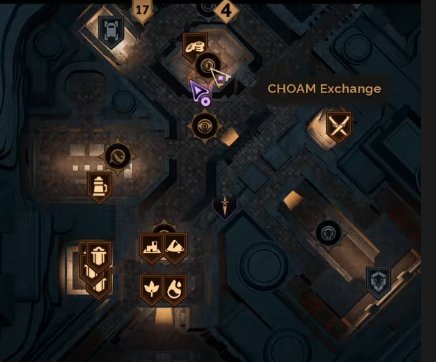
Trade Currency: What’s Actually Valuable?
Water
The backbone of survival on Arrakis. Used for crafting, drinking, and trading. (Learn how to farm water fast by reading our Dune Awakening water guide)
Spice
Highly valuable and rare. Used for high-tier gear, abilities, and sold at a premium. Trade spice smartly—it draws attention. (Learn how to farm spice fast here)
Crafted Goods and Repair Materials
Items like hardened plates, weapon mods, and survival tools are high-demand commodities, especially in faction wars or during event surges.
Trade Etiquette (and How Not to Get Robbed)
Always Inspect Items First
Hover over stats. If they’re trying to swap in junk gear after you confirm, cancel immediately.
Use Trusted Faction Members or Known Traders
Build a network. Most players in large factions or active guilds want long-term deals, not one-time scams.
Don’t Carry Everything to the Trade
If you’re trading a large stack of spice, only carry what you plan to sell. Otherwise, you’re just painting a target on your back.
Watch Chat for Scammers
Some players will spam “WTB/WTS” then disappear after taking items in PvP zones. Report them, and avoid them in the future.
Advanced Trading Tips: How to Profit Like a Desert Merchant
-
Buy low in PvE zones, sell high in PvP zones—gear scarcity drives up prices.
-
Watch for event-driven surges—Spice Wars, Sandworm Hunts, and new patch content often spike item demand.
-
Craft trade kits with multiple survival tools—bundle them for better pricing.
If you’re in it for profit, think like a merchant, not a hoarder.
Coming Soon: Global Trade Systems and Black Market Boards
Rumors (and data miners) suggest that Dune: Awakening will add:
-
Faction-controlled global boards
-
Rare item auction houses tied to territory
-
Black market hubs with rotating inventory
For now, stick to face-to-face deals—but keep your eyes on patch notes.
How to Profit from Trade Routes
If you really want to level up your trading game, you need to start thinking logistically, not just economically. Dune: Awakening is all about movement and survival, which means trade routes can be just as valuable as the items you’re selling.
What Is a Trade Route?
A trade route in Dune: Awakening refers to a repeatable, optimized path between:
-
Resource-rich areas (for gathering)
-
Safe crafting outposts (for refining)
-
High-demand trade hubs (for selling)
The idea is to gather, craft, and sell in a loop that minimizes risk and maximizes return.
Tips to Optimize Your Route
-
Use elevation — travel along ridges and rocks to avoid sandworms and ambushes.
-
Set up mid-route caches — store materials in hidden containers or guild bases to avoid overload.
-
Time your runs — some zones are more dangerous at night or during events.
-
Track supply and demand — if one hub is oversaturated with tools, divert to another.
Pro Tip: Record prices at each trading hub in a spreadsheet or journal. You’ll start to see trends over time and know exactly when and where to sell.
Avoid PvP Choke Points
Some clans and groups camp known trade routes to ambush merchants. Use alternate paths, off-map canyons, or travel during odd hours if you want to keep your goods.
If you must use a risky route, travel light and use hovercrafts or ornithopters to reduce sandworm risk and ambush exposure.
How to Create a Merchant-Focused Build
If trading is your endgame, then gear your character toward mobility, inventory, and bargaining power, not just combat.
Inventory Capacity Is King
Stacking resources efficiently lets you transport more in fewer runs. Here’s what helps:
-
Expanded inventory packs (craft or buy)
-
Outfit perks that reduce item weight
-
Vehicle cargo modules
Load up, travel light, and dump fast. That’s the merchant mindset.
Crafting Specialization
Focus your skill points and perks into:
-
Tool crafting
-
Water purification kits
-
Spice processing
-
Repair kits and weapon mods
These are always in demand. The more efficient you are at crafting them, the better your profit margins.
Social & Faction Bonuses
If you belong to a merchant-oriented faction, you may unlock:
-
Trade discount perks
-
Protected caravan runs
-
Bulk trade contracts with other players or guilds
Build relationships, not just stats.
Suggested Merchant Build Loadout
| Slot | Recommended Gear |
|---|---|
| Armor | Lightweight Trader’s Robe (movement speed bonus) |
| Tools | Portable Crafting Bench, Water Processor |
| Gadgets | Trade Scanner, Worm Detector |
| Vehicle | Hovercraft with Cargo Storage Mod |
This setup emphasizes speed, volume, and awareness—perfect for building wealth without combat.
Conclusion: Trade Smart or Get Burned
Trading in Dune: Awakening isn’t just a side system—it’s part of the social and survival ecosystem. If you want to thrive, not just survive, you need to:
-
Master direct trades
-
Learn safe zones and risky zones
-
Optimize profitable trade routes
-
Build a merchant-centric loadout
-
Understand market demand
-
Build a rep as a reliable trader or crafter
Trust is rare on Arrakis—but when you build it, it’s powerful.
Bonus Tip: Gear Up Before You Deal
Running low on gear to trade or flip for profit? You can buy Dune Awakening solari and dices for items and rare trade goods from trusted sellers like SSEGold. It's a smart way to prep before hitting those player hubs or crafting high-value trade kits.
Table of contents
Buy Dune Awakening Products
Recommended Article