
- > Dune: Awakening Console Edition - Release Date, Features & Player Guide
- > Double XP, Bans, and HUGE Update – What You Need to Know About Dune Awakening’s Latest Developments
- > Dune Awakening: Item Durability Boost and Risk-Reward System Updates
- > Dune: Awakening Best Early Start in Specializations - Key to Dominating Chapter 3
- > Why You Should Stop Farming the Deep Desert in Dune Awakening Before Chapter 3 – Gear Progression Explained
- > Dune Awakening Chapter 3: Major Endgame Overhaul & What It Means for Players
How the Ship Manifest System Works in Dune: Awakening
What Is the Ship Manifest in Dune: Awakening?
The Ship Manifest is Dune: Awakening’s centralized logistics and trade interface. If you’re running a guild, managing a spice caravan, or even moving rare materials between outposts, this is the tool that keeps everything in motion. Think of it as the lifeblood of Arrakis' economic arteries.
Unlike traditional MMOs where shipping or trading is background noise, Dune: Awakening brings these elements forward into a deep, interactive system. You don’t just click and forget—you're responsible for the loading, protection, and delivery of high-value goods across hostile terrain.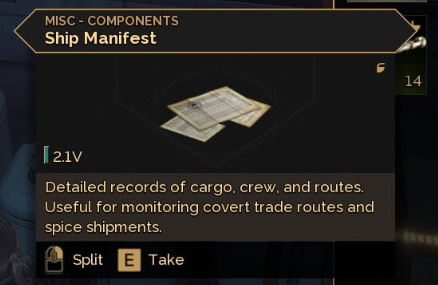
Why Does It Matter?
Let’s be real: survival MMOs live and die by their economic systems. In Dune: Awakening, every grain of spice matters, and your ability to transport it safely defines your strength in the world.
The Ship Manifest matters because:
-
It's the main tool for long-distance trading
-
Essential for guild logistics and resource planning
-
Drives the PvP conflict zones through transport control
-
Tied directly into spice gathering, smuggling, and tax systems
-
Encourages player cooperation and betrayal alike
Whether you're solo or in a massive guild, learning how to use the Ship Manifest efficiently can mean the difference between becoming a trade baron or dying broke in the sand.
How the Ship Manifest System Works
1. Acquiring Cargo Rights
Before you can use the Ship Manifest, your faction or guild must secure a trade route. These can be earned through PvP zone control, mission rewards, or trading licenses issued by in-game houses like House Atreides or House Harkonnen.
2. Manifest Setup
Once you’ve secured the route, the Ship Manifest UI allows you to:
-
Assign cargo: Choose what resources you’re shipping (e.g., spice, alloys, components).
-
Pick destination: Select one of the major hubs, outposts, or spice silos.
-
Choose transport type: Different ships or land haulers have varying capacity, speed, and vulnerability.
-
Select security detail: You can hire mercenaries, assign guild members, or risk it solo.
3. Time-Based or Real-Time Progression
Funcom has hinted that shipments might take real-time durations, meaning a shipment could take 2–3 hours to arrive. During that time, it’s vulnerable to interception unless properly guarded. Players may receive alerts when enemies attempt to intercept their cargo.
Ship Manifest and PvP: High Stakes, High Reward
Shipping goods isn’t just PvE busywork—it’s a target.
Enemy factions can scan for active manifests and organize ambushes. If they take your shipment, they claim the rewards. This makes your manifest activity a live wire for tension and conflict.
PvP-interactive trade routes are one of Dune: Awakening's most promising mechanics because they:
-
Force real-time coordination
-
Blend economy and warfare
-
Fuel the player-driven narrative
The Role of the Guild in Managing Ship Manifests
In large guilds, manifest management will likely become a full-time role.
Responsibilities might include:
-
Tracking logistics: What's shipping where, and when.
-
Organizing defense teams for high-value hauls.
-
Scouting for ambush routes and intel.
-
Adjusting shipping times to avoid prime PvP windows.
If you're playing support roles like Quartermaster or Strategist in your guild, expect to live inside the manifest UI.
Tips to Maximize Manifest Efficiency
-
Time Your Runs Wisely
Avoid peak PvP windows unless you're baiting. Run shipments when enemies are likely offline or distracted. -
Use Decoy Manifests
Send cheap filler cargo to draw attention while your real haul takes an alternate route. -
Coordinate in Voice
Spontaneous intercepts and route changes demand real-time comms—use Discord or in-game VOIP. -
Log Everything
Keep track of what was sent, lost, or intercepted. Over time, you’ll start to identify safe patterns or hotspots.
Is Ship Manifest Mandatory?
No. You can totally ignore it and play Dune: Awakening as a lone explorer or PvE grinder. But if you’re in it for the long haul—especially in group or faction play—ignoring the manifest system means leaving power and profit on the table.
Spice must flow, and someone's got to ship it.
Final Thoughts
The Ship Manifest system in Dune: Awakening is shaping up to be one of the game’s most unique and compelling features. It's not just a menu or background mechanic—it’s a sandbox for high-stakes economic warfare.
If you’re a fan of player-driven markets, logistics gameplay, or just love the political backstabbing that comes with trade dominance, then this system was made for you.
And if you’re just starting out? Learn the Ship Manifest early. By the time the desert’s watching, you’ll be the one signing contracts while others scavenge for scraps.
Table of contents
Buy Dune Awakening Products
Recommended Article