
- > PoE 2 Shadow Class Guide: Skills, Stealth, Traps & Ascendancies
- > PoE 3.30 Currency Farming Guide: Threads, Atlas Regions & Week One Plans
- > PoE 1 Covens of Umbra: Complete League Start Guide (3.30)
- > Path of Exile 2 1.0: What's Actually Confirmed?
- > PoE 2 Duelist Class Guide: Release Date, Skills, Ascendancies & Best Builds
- > PoE 2 0.5.5 Forbidden Rites: How to Dominate the New Event League From Day One
PoE 3.30 Wickerman & Viscera Guide: How It Works & What to Farm

If you have been playing Path of Exile 3.30 Covens of Umbra, you have probably noticed the wooden effigy in town. That is the Wickerman, and the Viscera you attach to it are an important part of character progression this league. By defeating Fate-empowered bosses, you can collect their remains and turn them into additional character bonuses. The system offers more than 120 different Viscera, but you can equip only four at a time, so knowing which ones to farm matters.
Before investing heavily in boss farming, make sure your character has enough currency and gear to handle increasingly difficult encounters. You can check out SSEGold's PoE Currency for additional trading options. If you are still working through the early game, our PoE 3.30 Covens of Umbra League Start Guide can also help with progression. This guide focuses on how Wickerman Viscera works, where to get them, and which upgrades are worth pursuing.
What Is the Wickerman in PoE 3.30?
The Wickerman is a character-specific progression system introduced in Covens of Umbra. It allows you to equip body parts collected from Fate-empowered bosses, gaining additional modifiers based on the Viscera you choose.
There are four equipment slots:
| Slot | Example Viscera | Main Benefit |
|---|---|---|
| Head | Voltaic Skull | Physical-to-Lightning conversion |
| Arm | Lesser Warden's Arm | Maximum Life |
| Body | Greater Golemic Stone | Conditional Stun protection |
| Leg | Scholar's Leg | Improves bonuses from equipped Gloves |
These examples illustrate how different Viscera can support different builds. Their exact modifiers and values depend on the item version, so check the actual tooltip before deciding what to equip.
Each character has its own Wickerman, meaning your league starter and second character need separate setups. However, Viscera are tradeable, so you can sell unwanted pieces or purchase upgrades from other players.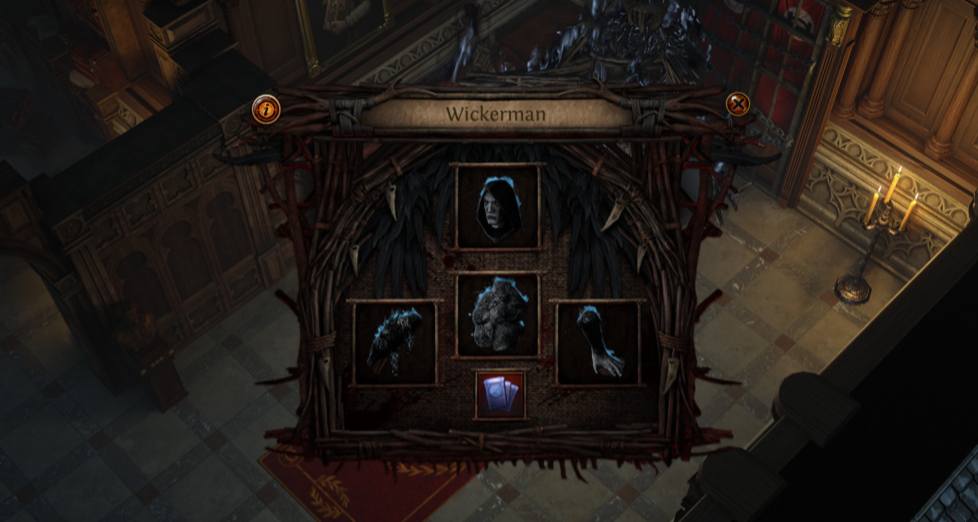
How to Get Wickerman Viscera in PoE 3.30
Viscera come from bosses empowered by Fates. You cannot simply kill an ordinary campaign or map boss and expect it to drop a body part.
The farming process starts with Covenites performing rituals around a cauldron. Disrupt the ritual, select a Fate for the area's boss, and then defeat that empowered boss.
The basic process is:
-
Find and disrupt a Coven ritual.
-
Select a Fate for the area's boss.
-
Apply additional Fates if your character can handle the increased difficulty.
-
Defeat the empowered boss and collect its rewards.
-
Check for Viscera and equip or trade the pieces you do not need.
A boss can carry up to three Fates. Each Fate increases both difficulty and rewards, and GGG confirms that the chance of obtaining Viscera improves as you invoke more Fates. Repeating the same Fate can further improve the chance.
One important detail: ordinary Fate-empowered bosses do not guarantee a Viscera drop. GGG has not published a universal numerical drop rate, so be careful with farming guides claiming exact percentages.
The practical approach is to start with manageable Fate combinations. Once your damage and defenses are strong enough, increase the difficulty to improve your farming returns.
Viscera Tiers Explained
Not every Viscera offers the same level of power. The system includes Lesser, Normal, and Greater versions, while Pinnacle Viscera form a special category associated with Grim Fate encounters.
| Type | Main Source | Purpose |
|---|---|---|
| Lesser | Earlier campaign bosses | Useful bonuses during leveling |
| Normal | Fate-empowered campaign and Atlas bosses | General character progression |
| Greater | Higher-end boss encounters | Stronger, more specialized upgrades |
| Pinnacle | Grim Fate-empowered Pinnacle Bosses | Powerful endgame bonuses, with Normal and Greater versions |
Lesser Viscera are particularly useful when leveling a new character. For example, Lesser Warden's Arm from Brutus provides additional maximum Life, making it a useful early defensive upgrade.
Normal Viscera offer more options as you enter the Atlas. Greater Viscera are longer-term targets for established builds.
Do not confuse Pinnacle Viscera with a separate fourth upgrade tier. Pinnacle describes the source of the item, and these pieces can have Normal or Greater versions.
Best Wickerman Viscera for Different Builds
There is no single best Wickerman setup for every character. The right combination depends on your damage type, equipment, and the content you want to farm.
Here are some useful examples:
-
Life-based builds: Lesser Warden's Arm is a straightforward defensive option. Maximum Life is valuable when progressing through difficult bosses.
-
Physical-to-Lightning builds: Voltaic Skull is worth investigating because its conversion modifier can complement builds designed around elemental damage scaling.
-
Glove-focused builds: Scholar's Leg can improve the bonuses gained from equipped Gloves, making it particularly interesting when your gloves provide important offensive or defensive modifiers.
-
Defensive builds: Greater Golemic Stone offers conditional Stun protection, which can help in encounters where interruptions are a problem.
A common mistake is choosing Viscera simply because they have a higher tier. A Greater modifier that does not benefit your build is not automatically better than a Normal piece that provides an important stat.
Check your existing equipment and passive tree before choosing. If your resistances are already capped, for example, another resistance bonus may offer less value than additional Life or damage.
How to Farm Specific Viscera Efficiently
With more than 120 Viscera available, farming randomly is not the best strategy. Each campaign boss and Atlas map boss has its own associated Viscera, so you should identify the item you want before deciding which encounters to run.
A more efficient approach looks like this:
-
Identify the modifier: Decide whether your character needs Life, recovery, damage conversion, or another specific effect.
-
Find the source boss: Check which campaign area or Atlas map boss drops the Viscera you want.
-
Choose an appropriate Fate: More Fates improve the chance of obtaining Viscera, but also make the encounter harder.
-
Upgrade gradually: Replace useful Lesser and Normal pieces as stronger versions become available.
-
Compare farming with trading: If a particular drop is taking too long, check whether buying it is more efficient.
Do not underestimate the difficulty increase from multiple Fates. A farming strategy is only efficient if your character can defeat the empowered boss consistently.
For additional currency strategies, see our PoE 3.30 Currency Farming Guide. Having enough currency makes it easier to trade for missing Viscera and improve your equipment between boss encounters.
Grim Fates and Pinnacle Boss Viscera
Grim Fates take the Wickerman system into the endgame. Unlike regular Fates used on campaign and map bosses, Grim Fates allow you to empower Pinnacle Boss encounters.
GGG has showcased twisted versions of major bosses, including Sirus, the Shaper, and Uber Elder. These encounters introduce additional mechanics and significantly increase the challenge.
The main attraction is the reward. Defeating a Pinnacle Boss empowered by a Grim Fate guarantees its corresponding Pinnacle Viscera. These items provide some of the most desirable Wickerman upgrades available.
There are Normal and Greater Pinnacle Viscera. The Greater versions come from the more difficult Uber encounters and offer additional exclusive modifiers.
This makes Grim Fate farming a worthwhile long-term goal, particularly for players optimizing their endgame characters. However, do not rush into these encounters with an undergeared build. Learn the boss mechanics and make sure your damage and defenses are ready first.
Grim Fate encounters also play a role in progressing toward the Coven Queen, the league's final boss.
Common Wickerman Viscera Mistakes
A few mistakes can make Viscera farming much less efficient:
-
Stacking too many Fates too early: Higher difficulty is not worthwhile if you cannot reliably kill the boss.
-
Forgetting the ritual: You must disrupt the Coven ritual and select a Fate before fighting the boss. Killing it normally will not give you its Viscera.
-
Ignoring useful lower-tier pieces: A Lesser Viscera that solves a defensive problem can be more valuable than an unsuitable Greater upgrade.
-
Keeping every duplicate: Viscera are tradeable. Check their value before selling or discarding unwanted pieces.
-
Assuming characters share Wickerman bonuses: Each character has its own setup, so plan your upgrades separately.
Final Thoughts
PoE 3.30 Wickerman Viscera adds another meaningful layer of character customization to Covens of Umbra. The key is not collecting every available piece but finding four modifiers that genuinely improve your build.
Start with useful Lesser and Normal Viscera, target specific bosses for upgrades, and gradually move toward Greater and Pinnacle Viscera as your character becomes stronger. Use Fates carefully, compare farming with trading, and avoid chasing higher-tier items that do not fit your setup.
Once you understand the connection between Coven rituals, Fates, boss drops, and Wickerman equipment, the system becomes much easier to manage and offers a worthwhile progression goal throughout the 3.30 endgame.
Table of contents
Buy Path of Exile Products
Recommended Article