
- > Path of Exile 3.27 Keepers of the Flame: Best League Starter Builds You Should Try
- > Path of Exile: Bloodline Classes Explained — Keepers of the Flame Expansion Guide
- > POE 3.29 Delirium Mirror Farming Guide: Best Setup, Maps and Profit Strategy
- > PoE 3.29.3 Patch Notes Guide: Cursed Ducats, Essence Nerf and Changes Explained
- > Top 7 God Tier Builds to Retroll PoE 3.29 League Endgame
- > PoE 3.29.1 Patch Economy Guide: Mercenary & Abyss Buffs, Meta Shifts & Currency Farming Updates
Exploring the New Mechanics: Grafts, Genesis Tree & Bloodlines in PoE 3.27

Path of Exile’s Keepers of the Flame league (patch 3.27) introduces several bold and transformative mechanics that reshape how progression, crafting, and character customization work. Among the most important are Grafts, the Genesis Tree, and Bloodline Ascendancies. Together, these features deepen customization, reward exploration, and open new build possibilities. Below, we break down each system and how they interact.
What is Keepers of the Flame (3.27)?
Before diving into specifics, it helps to see how these mechanics fit into the league’s bigger picture.
-
Keepers of the Flame acts as a sequel to the original Breach mechanic, weaving its narrative and gameplay further.
-
The league reworks Breach encounters, introduces new “hive” and stabilized breaches, and pairs these with the new systems of Grafts, the Genesis Tree, and Bloodlines.
-
One core new aspect: the Genesis Tree is a league-specific passive tree (for rewards, crafting, and progression), and Grafts are gear/ability modules tied to it.
-
Bloodline Ascendancies offer a second, optional “ascendancy” path, unlocked via defeating specific bosses, letting you mix abilities from main ascendancy + bloodline.
These systems together aim to give you more choices and more paths — not just better or stronger, but different.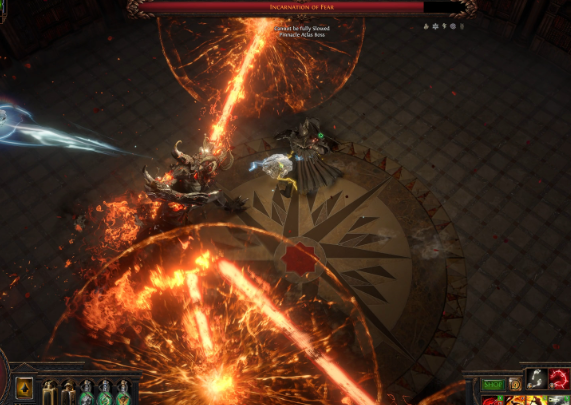
Grafts: Bio-Augmentations You Fuse to Your Character
What Are Grafts?
Grafts are essentially “body parts” you graft onto your character. Visually grotesque (in a dark fantasy way), they offer both passive bonuses and active skills.
-
There are 16 different Graft types confirmed, each providing different kinds of benefits.
-
Initially, you can equip one Graft, but later you unlock a second slot via the Genesis Tree progression.
-
Grafts collect a resource called Graftblood from enemies you kill, which feeds into your Genesis Tree’s growth and rewards system.
What Grafts Do & How They Work
-
Passive bonuses: Each graft grants intrinsic stat buffs — e.g. damage boosts, defenses, resistances, or utility.
-
Active skills: Many grafts also grant a unique skill you can use (often filling gaps in your build).
-
Synergy with the Genesis Tree: The graft you equip influences how the tree crafts items or rewards you — for example, you may bias “grow” rewards beneficial to your graft type.
-
Some Grafts modify or extend build options. For example, a fire-themed graft might grant a fire skill or boost fire damage. Others may grant utility skills (crowd control, movement, etc.).
Essentially, Grafts let you extend your build horizontally (not only through gear and gems but through biomechanical augmentations) and tailor rewards around what you grafted.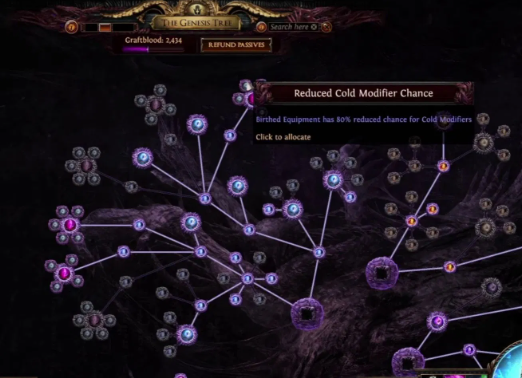
The Genesis Tree: Growth, Crafting & Rewards
What Is the Genesis Tree?
The Genesis Tree is a new league-only passive tree system. It sits alongside your regular character/passive trees but focuses on crafting, reward generation, and synergy with grafts.
-
As you engage with Breach encounters and collect Graftblood, you invest into the Genesis Tree.
-
The tree is respec-friendly — you can rearrange your investment freely to experiment with different reward paths.
-
Through the tree, you can “grow” items: grafts, rare equipment, unique variants, and special currency (especially for grafts).
Key Components & Concepts
-
Growing Items & Grafts
You can branch the tree toward producing new grafts or improving existing ones. If you specialize in a certain graft type, the tree can bias what kinds of grafts or upgrades you obtain. -
Fleshy / Foulborn Currency
Some branches let you generate fleshy versions of currency orbs, which behave somewhat like normal PoE orbs (Augmentation, Exalted, etc.) but interact particularly with grafts and tree-grown items.
Moreover, Foulborn variants of items may appear: mutated versions of items with altered or new modifiers. That is, a unique grown via the tree might mutate one of its mods to a different one. -
Targeted Rare Crafting / Biasing Rewards
You can influence (not guarantee) which base types or modifiers appear on grown rares by guiding the tree investment. The tree may push toward certain modifier pools or exclude undesirable ones. -
Unlocking More Graft Capacity
One branch unlocks a second graft slot so you can equip two grafts at once. -
Reward Scaling & Experimental Flexibility
Because the Genesis Tree is respec-friendly, you can adapt your strategy as the league meta evolves, shifting toward more graft production, more unique growth, or more fleshy currency, depending on your needs.
Interaction with Grafts & Bloodlines
The tree ties deeply into graft selection: whichever grafts you equip influence what branches of the tree yield more value. Also, the bloodline system (see below) can further interact with what you produce or how you allocate rewards.
Bloodline Ascendancies: Secondary Paths & Customization
What Are Bloodlines?
Bloodline Ascendancies are essentially a secondary ascendancy class you can unlock and assign to your character. They act in tandem with your primary ascendancy, sharing the same 8 ascendancy points.
-
There are 10 new Bloodline classes, each tied to iconic bosses or systems.
-
To unlock a Bloodline, you must defeat the associated boss (or complete the unlocking condition) in the endgame.
-
You can mix and match: your main ascendancy gives your class identity, while the Bloodline gives extra bonuses, abilities, or modifiers you wouldn’t otherwise get.
Mechanics & Use Cases
-
Shared points: You allocate your ascendancy points between your base ascendancy and your bloodline, so choices become meaningful tradeoffs.
-
Unique benefits: Bloodlines provide passive nodes or modifiers that complement your build, open alternate paths, or add flavor.
-
No restrictions by class: You can use any bloodline on any character, regardless of your main class.
-
Synergy potential: Because Bloodlines can grant modifiers or bonuses that align with grafts or Genesis Tree strategies, creative combinations can emerge.
For example, say you unlocked a Fire-themed Bloodline tied to a fire boss. If you graft a fire graft and push the tree toward fire-bias rewards, the Bloodline might enhance your fire damage or graft output.
Strategic Implications & Player Choices
These mechanics are deep, and they intentionally give players multiple axes of decision-making beyond gem and gear optimization. Here’s how they change strategy:
-
Diversification vs. specialization
You can diversify into multiple graft types, or specialize deeply into one graft and bias your Genesis Tree and Bloodline combo to support it. -
Meta shifts matter more
Because the systems are respec-friendly (especially the Genesis Tree), you can respond mid-league to meta or balance changes by shifting your tree investment and graft focus. -
Unlock order is meaningful
What Bloodlines you unlock and when (i.e., what bosses you defeat) affects what options you have. This influences build paths and what graft synergies you can unlock. -
Build hybridity
Builds may emerge that lean less on traditional skill/gem scaling and more on graft-plus tree synergy. In effect, grafts and tree rewards become integral to build power—not just add-ons. -
Value of experimentation
Because you can respec and reallocate grafts/Genesis Tree paths, experimentation is encouraged. Early picks aren’t always permanent doom.
Early Tips for Players Getting Started
-
Try one solid graft path early, see how it complements your build, and then adjust the tree around it.
-
Don’t spread yourself too thin early — focus on unlocking key tree nodes (like second graft slot) before branching widely.
-
Prioritize Bloodlines tied to bosses you expect to reach reliably in your early mapping/clear strategy.
-
Keep an eye on Foulborn items or mutations — sometimes they yield surprising high-end power.
-
Use the respec freedom of the Genesis Tree to test combinations instead of locking in something too early.
(Best starter builds for poe 3.27)
Conclusion
The Graft, Genesis Tree, and Bloodline Ascendancy systems in PoE 3.27: Keepers of the Flame bring more customization, more pathways, and more strategic depth to the game. They transform the league from simply "which build is strongest" to “which hybrid of skills, grafts, and reward strategy will best suit your playstyle.”
Table of contents
Buy Path of Exile Products
Recommended Article