Path of Exile 2 Patch 0.5.4 has completely disrupted the in-game economy. With major changes to the Expedition Atlas Tree, revamped Waystone scaling, and new crafting mechanics tied to the Orb of Sacrifice, players are seeing dramatic shifts in Divine Orb inflation and supply chains.
If you are struggling to sustain your Waystones or feel stuck in low-profit mapping loops, this guide breaks down exactly how top traders and currency farmers are generating massive returns per hour.
👉 Many players also accelerate early setup by securing starter currency bundles from trusted marketplaces like SSEGold, especially when transitioning into high-investment mapping strategies.
5.0
The S-Tier Meta: Grand Expedition Farming Setup
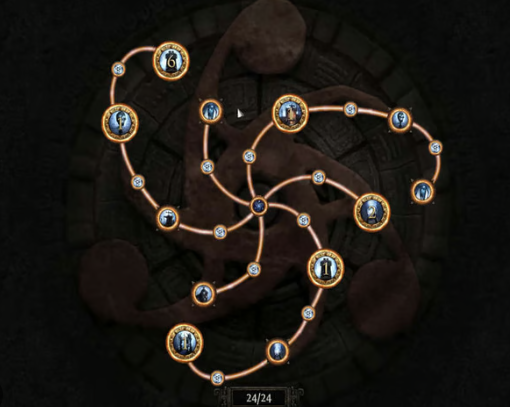
The 24-Point Expedition Atlas Tree
The backbone of PoE 2 currency farming in 0.5.4 is the Grand Expedition Atlas Tree. With the updated 24-point optimization path, players can dramatically increase:
Artifact drop rates
Logbook frequency
Remnant amplification chains
According to community-tested mapping theory, Expedition remains the highest raw Divine Orb generator when fully optimized.
Budget vs. Juiced Maps Strategy
There are two dominant farming approaches in Patch 0.5.4:
🔹 Budget Strategy (Stable Income)
20% Item Rarity Waystones
Low investment mapping
Focus on consistent Expedition nodes
🔹 Juiced Strategy (High Risk / High Reward)
Aldur’s Saga stacking
Double-Remnant Expedition chaining
Maximum Scarab-equivalent scaling
💡 Pro-Tip: Always prioritize Waystone sustain before scaling rarity. Running out of maps kills more profit per hour than bad RNG.
The Uhtred Boss Tech (Deplete Mana Rune Flip)
One of the most controversial but profitable techs in 0.5.4 is the Uhtred Deplete Mana Rune quest item loop.
Players report flipping rare quest variants for up to 400 Divines when correctly rolled and listed in high-demand trade cycles.
💡 Pro-Tip: Do not rush listings. Uhtred variants spike in value during weekend economy resets.
The A-Tier Alternative: Ritual Omen Loops
If Expedition feels too volatile, Ritual farming loops offer a safer and steady alternative.
City Map Strategy (Breaking Tablet Limits)
Using City Maps, players can bypass the standard two-tablet restriction and stack Ritual altars more efficiently.
Core loop:
Chain compact City layouts
Force Ritual spawn density
Reset maps with high Omen probability modifiers
High-Value Omens to Filter For
Top-selling Ritual Omens in 0.5.4 economy include:
Abyssal Echoes (high Divine demand)
Omen of Light Binding
Omen of Corrupted Fortune
Echo Seal Variants
These items function as mid-tier liquidity assets, often traded faster than raw currency.
💡 Pro-Tip: If your stash tab is filling with low-tier Omens, bulk-sell them early before market saturation drops margins.
Crafting for Profit: The Orb of Sacrifice and Ziri Currency System
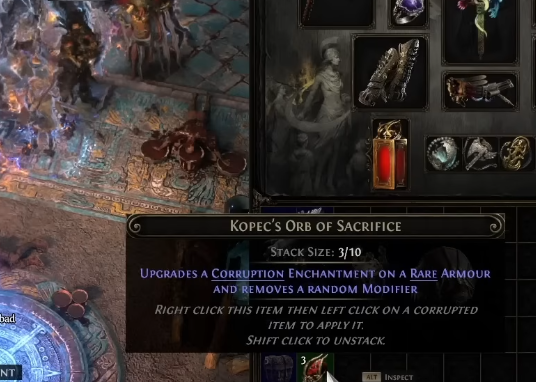
Patch 0.5.4 introduces one of the most aggressive crafting economies yet: the Orb of Sacrifice system, paired with four new Ziri crafting currencies. (Read our Orb of Sacrifice guide)
Core Profit Loop
Buy cheap corrupted gear from trade
Apply Orb of Sacrifice to upgrade latent modifiers
Use Ziri currencies to refine enchantments
Target +2 level modifiers or rare hybrid rolls
Flip on trade market for exponential profit
This system rewards knowledge more than raw farming time.
💡 Pro-Tip: The highest ROI comes from low-item-level corrupted bases with hidden affix potential—not expensive uniques.
Conclusion
Patch 0.5.4 has reshaped the entire PoE 2 economy. Whether you focus on Expedition Atlas farming, Ritual Omen loops, or Orb of Sacrifice crafting flips, the key takeaway is simple:
However, getting these systems online requires time, currency, and a strong starter build.
Instead of spending 20+ hours struggling to stabilize your Waystones, many players choose to jumpstart their progression with trusted services like SSEGold, helping them secure early Divine Orbs, mapping gear, and crafting resources to enter the real economy game faster.