
Hell Let Loose: Vietnam - Release Date, New Features & Complete Player Guide
Latest News
Release Date & Delay
August 13, 2026 — Hell Let Loose: Vietnam launches digitally on PC (Steam & Epic Games Store), PlayStation 5, and Xbox Series X|S. The physical disc editions for PS5 and Xbox Series X follow on August 4, 2026 (already available in select regions).
Originally slated for June 18, 2026, publisher Team17 and developer Expression Games delayed the game following extensive feedback from the open beta weekend and internal playtests. In an official statement, the team explained: "In addition to your feedback, we have also been carrying out intensive internal playtests for both the PC and Console versions... we have identified several areas where additional development time will allow us to deliver a stronger launch experience."
The open beta ran from May 29 to June 1, 2026 on Steam, peaking at over 24,000 concurrent players. The community response was overwhelmingly positive, with particular praise for the asymmetric faction design, helicopter mechanics, and tunnel system.
Platforms & Cross-Play
- PC: Steam and Epic Games Store (digital only)
- PlayStation 5: Digital + physical disc editions
- Xbox Series X|S: Digital for both, physical disc for Series X only
- Not on Game Pass or PS Plus at launch
- Cross-play: Confirmed between platforms, though full details on cross-play party support are still being finalized
What's New: From WWII to Vietnam
Hell Let Loose: Vietnam is not a DLC or expansion — it's a full standalone sequel that trades the European theater for the jungles, rivers, and mountains of Southeast Asia. Expression Games first revealed the title at Gamescom 2025, and it arrives exactly one year later.
The core DNA remains: 50v50 tactical warfare where communication, map control, and squad coordination matter far more than individual aim. But Vietnam introduces several transformative mechanics:
Helicopters — The Sky Belongs to the US
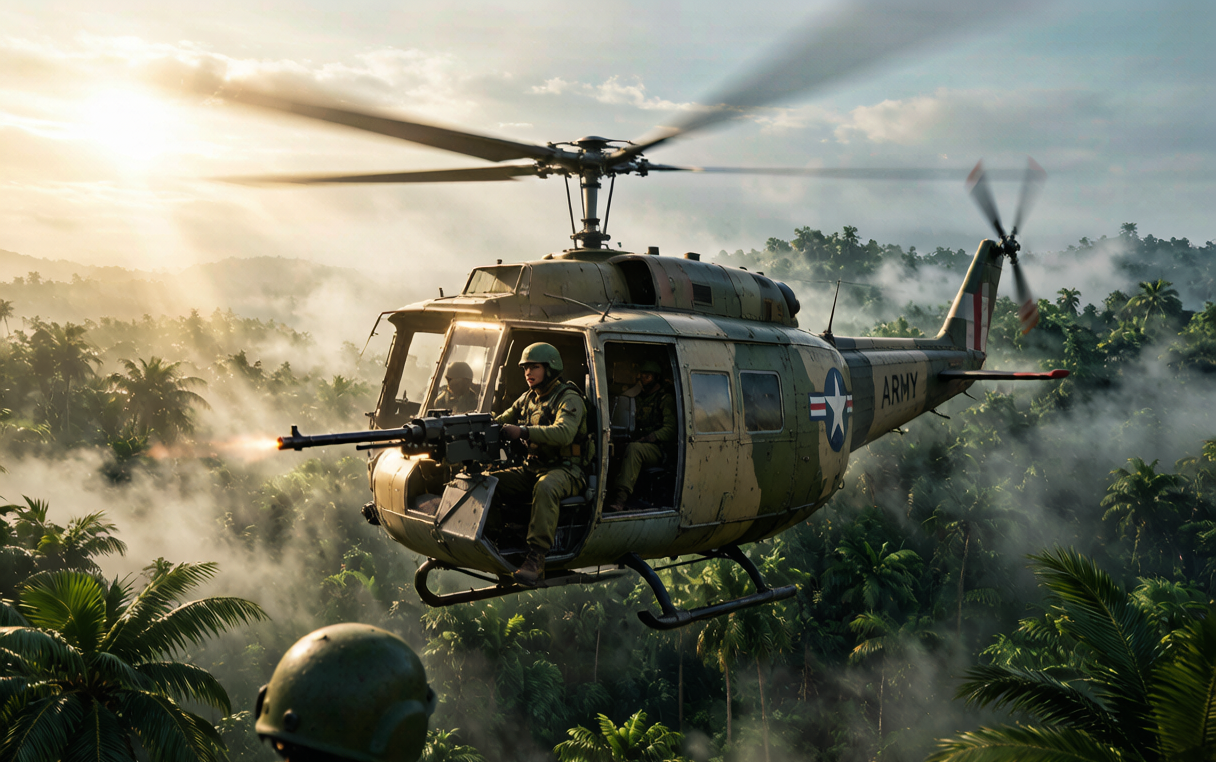
For the first time in the series, helicopters bring vertical mobility to the battlefield. The iconic Bell UH-1 "Huey" serves multiple roles:
- Troop Transport: Deliver entire squads behind enemy lines or to contested objectives
- Supply Drops: Air-drop ammunition and resources to forward positions
- Fire Support: Door gunners provide suppressive fire during insertions and extractions
- Reconnaissance: Scout enemy positions and Garrison locations from above
Piloting a Huey through narrow jungle valleys while dodging anti-aircraft fire is one of the most demanding — and rewarding — roles in the game. Helicopter pilots must master low-altitude flying, landing under pressure, and coordinating with infantry squads via voice comms.
The helicopter unit includes two roles:
- Helicopter Pilot: Flies the aircraft and manages transport, supply, and fire support missions
- Aviation Logistics Officer: Coordinates landing zones, organizes supply drops, and keeps helicopter operations running smoothly
Tunnels — The NVA's Underground Advantage
The North Vietnamese Army fights asymmetrically. Instead of helicopters, the NVA builds underground tunnel networks — a mechanic directly inspired by the historic Củ Chi tunnels. Tunnel Combatants can dig and connect tunnel entrances across the map, creating fast-travel routes that let squads:
- Flank enemy positions by appearing behind defensive lines without crossing open ground
- Relocate rapidly between objectives without exposing themselves to helicopter fire
- Ambush unsuspecting enemies by emerging from hidden tunnel exits in dense jungle
Tunnels can be destroyed by US forces using explosives, so placement and concealment are critical. A well-maintained tunnel network is often the difference between a routed NVA team and one that holds the line against superior American firepower.
River Warfare — Patrol Boats
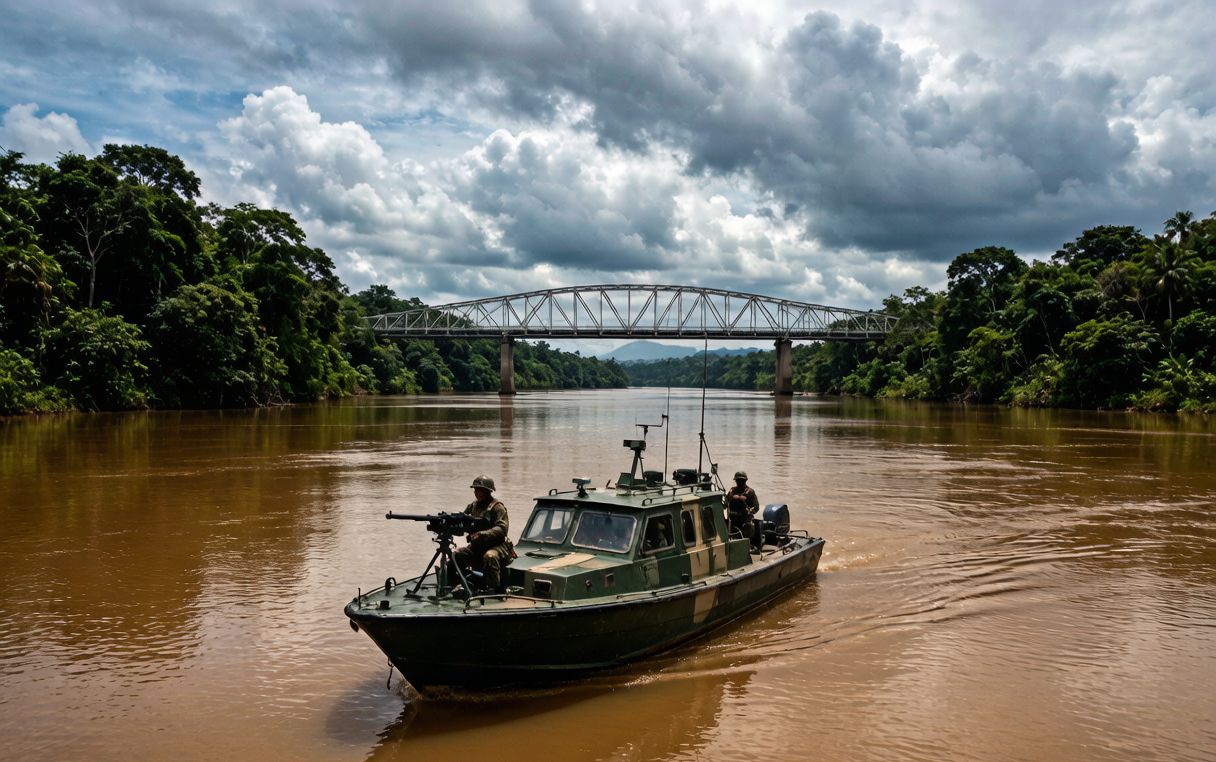
Both factions have access to heavily armed patrol boats, adding a naval dimension to every map with waterways. The US operates PBR (Patrol Boat, River) vessels, while the NVA fields its own armed watercraft. Patrol boats serve as:
- Mobile spawn points for squad redeployment
- Heavy fire support platforms with mounted machine guns
- Rapid transport along river networks that cut through the jungle
On maps like Thanh Hóa Bridge — bisected by the massive Nam Ma River — control of the water can determine control of the entire battlefield.
New Movement System
Vietnam's dense terrain demanded an overhauled movement system:
- Swimming: Cross rivers and waterways without boats
- Climbing: Scale rocky terrain and reach elevated positions
- Fast-crawling: Move through thick undergrowth while staying low
- Dragging wounded allies: Medics can now pull downed teammates into cover before reviving them
The Battlefield: 6 Launch Maps
Six large-scale maps launch with the game, each approximately 2 kilometers across with dynamic weather and lighting variants. Three have been confirmed in detail:
1. Thanh Hóa Bridge — River Crossing
Location: Thanh Hóa Province, North Vietnam | Operation: Rolling Thunder
The map featured in the open beta. The colossal Nam Ma River bisects the battlefield, with Dragon's Jaw Bridge serving as the central chokepoint. Dense jungle riverbanks, helicopter insertion routes, patrol boat lanes, and NVA tunnel-based defense make this a vertically and horizontally complex map. Control the bridge, control the map — but flanking through the jungle and waterways is consistently more effective than a direct assault.
2. Đắk Tô Airfield — Central Highlands
Location: Kon Tum Province, Central Highlands | Operation: Battle of Dak To (November 1967)
A stark contrast to the river maps. The central airstrip is a wide-open kill zone surrounded by thick jungle on all sides. Ridgeline dominance is critical — squads that control the high ground can observe and suppress movement across the entire runway. Crossing the airstrip requires coordinated smoke screens, suppressive fire, and timing. The map tests both close-quarters jungle fighting and long-range engagement discipline.
3. Dragon's Jaw Bridge (Hàm Rồng) — The Icon
Location: Thanh Hóa Province, North Vietnam | Operation: Rolling Thunder / Linebacker II
One of the most heavily defended bridges in history, Dragon's Jaw withstood years of relentless US bombing campaigns before finally being destroyed in 1972. In-game, the bridge and its surrounding industrial infrastructure create a dense urban-rural hybrid environment with multiple vertical levels, exposed sightlines, and countless flanking routes. This map rewards squads that coordinate demolition, fortification, and close-air support.
Three additional maps remain unrevealed but are confirmed to include diverse terrain: dense jungle, open rice fields, coastal/beach environments, and urban zones.

Roles & Classes: 17 Specialized Roles Across 6 Units
One of Hell Let Loose: Vietnam's defining features is its role system. Every soldier on the battlefield fills a specific function, and a team that balances its roles will almost always defeat one that doesn't.
Command Unit (1 Role)
The Commander oversees the entire battlefield from a strategic level. This role calls in recon planes for enemy position scans, directs bombing runs on fortified objectives, drops supply crates for garrison construction, and coordinates every Squad Leader on the field. Access to the Commander role is locked behind three mandatory tutorials — Getting Started, Squad Leader, and Commander — ensuring only players who understand the full match mechanics can take command.
Infantry Unit (7 Roles)
The Infantry Unit forms the backbone of every team with seven distinct combat roles, offering a natural progression from beginner to specialist.
For players just starting out, the Rifleman is the ideal entry point — no special responsibilities, no tutorials required, just standard infantry duty with an M16A1 or Type 56 rifle and the ability to drop ammo boxes for teammates. It is the perfect role for learning maps and core mechanics without pressure.
For close-range fighters, the Assault specializes in breaching and point-clearing with SMGs and grenades, excelling in the tunnel fights and jungle ambushes that define Vietnam's combat. The Machine Gunner represents the other end of the spectrum, wielding the belt-fed M60 (US) or RPD (NVA) to deliver sustained suppressive fire that locks down chokepoints and denies enemy movement across open ground.
Support-oriented players should look to the Medic — a role made even more impactful by Vietnam's new dragging mechanic, which lets medics pull downed teammates into cover before administering morphine and reviving them. The Engineer is the tactical builder, responsible for constructing barbed wire, fortifications, repair stations, and resource nodes while also carrying the tools to destroy enemy structures and vehicles. The Support/Specialist carries the supply crate that Officers need to build Garrisons — arguably the single most impactful role a new player can pick, as one good Support player directly enables the spawn network that wins matches. Finally, the Anti-Tank role serves as the team's armor hunter, carrying the M72 LAW (US) or RPG-2 (NVA) and requiring solid knowledge of vehicle weak points to track and destroy enemy tanks.
Recon Unit (2 Roles)
The two-player Recon Unit operates deep behind enemy lines. The Spotter is the intelligence engine — locating enemy Garrisons and Outposts, marking high-value targets for the Commander, and directing mortar fire. The Sniper provides long-range elimination of priority targets, but this role is not recommended for new players as it demands extensive map knowledge, trigger discipline, and an understanding of how spawn networks function. A Recon pair that hunts Garrisons instead of chasing kill counts can single-handedly collapse an enemy team's defensive line.
Armour Unit (1 Role)
The Crewman operates armored vehicles including the iconic M48 Patton tank. This is a squad-level role requiring tight coordination between an experienced driver, gunner, and commander — a well-coordinated tank crew controls open ground, but a lone tank without infantry support is an easy target for Anti-Tank ambushes.
Helicopter Unit (2 Roles — US Only)
Exclusive to the US Armed Forces, the Helicopter Unit brings vertical mobility to the battlefield. The Helicopter Pilot flies the Bell UH-1 Huey for troop transport, supply drops, and fire support — a high-skill role that demands extensive practice in empty servers before taking live missions, as positioning a helicopter under anti-aircraft fire while coordinating with ground squads is among the most demanding jobs in the game. The Aviation Logistics Officer manages the strategic side of air operations: selecting landing zones, organizing supply drop schedules, and ensuring helicopter missions are coordinated with infantry movements on the ground. Together, these two roles form the backbone of the US team's asymmetric advantage.
Mortar Squad (3 Roles)
The three-person Mortar Squad provides indirect fire support from behind the front lines. The Observer serves as the human targeting computer, locating enemy positions and calculating precise firing coordinates through binoculars and map triangulation. The Mortar Gunner adjusts the tube's elevation and direction to deliver explosive or smoke rounds onto those coordinates. The Mortar Support rounds out the squad by transporting ammunition from supply points and defending the mortar position from flanking enemies. An effective Mortar Squad coordinated with Recon spotting can suppress an enemy Garrison or strongpoint without ever drawing a direct line of sight.
NVA-Exclusive Roles
The North Vietnamese Army fields two faction-exclusive roles that define its asymmetric identity. The Tunnel Combatant builds and maintains the NVA's underground tunnel network — the faction's direct counterpart to American helicopters. This role specializes in stealth, flanking maneuvers, and ambushes, appearing behind enemy lines without warning by emerging from hidden tunnel exits dug deep in the jungle. For players who prefer patient infiltration over frontal assaults, the Tunnel Combatant is unmatched. The Anti-Air Specialist operates surface-to-air systems designed to deny safe airspace to American helicopters, forcing Huey pilots into dangerous low-altitude flight paths where they become vulnerable to RPG-2 ambushes and small-arms fire. A single skilled AA Specialist can effectively ground an entire US air operation, stripping the Americans of their greatest advantage.
Weapons & Arsenal
Built in collaboration with the Royal Armouries, every weapon in Hell Let Loose: Vietnam features historically accurate models, animations, and audio recorded from real artifacts.
US Armed Forces Arsenal
The American arsenal centers on the M16A1 assault rifle, the standard-issue infantry weapon with a 20-round magazine that performs reliably at medium range. Two variants expand its capabilities: the M16A1 with Bayonet adds a melee attachment for close-quarters jungle encounters, and the M16A1-M203 mounts an under-barrel 40mm grenade launcher for breaching fortified positions and area denial. The M1911A1 pistol serves as the standard sidearm carried by officers and vehicle crews.
For sustained firepower, the belt-fed 7.62mm M60 machine gun delivers devastating suppressive fire that can lock down entire chokepoints, while the bolt-action M40 sniper rifle provides Recon teams with precision elimination capability at long range. The single-shot break-action M79 grenade launcher fires 40mm high-explosive rounds for clearing bunkers and dense foliage.
Special-purpose weapons round out the arsenal. The M72 LAW is a single-use 66mm anti-tank rocket that gives infantry a fighting chance against the M48 Patton and armored vehicles. The M2A1-7 flamethrower excels at area denial and bunker clearing in close-quarters environments. Finally, the Model 77E shotgun delivers devastating stopping power at close range — ideal for tunnel clearing and jungle point defense.
North Vietnamese Army Arsenal
The NVA's weapon selection reflects its historical reliance on Soviet and Chinese arms, creating a distinct feel from the American arsenal. The Type 56 assault rifle — a Chinese AK-47 derivative with a 30-round magazine and integrated folding bayonet — forms the backbone of NVA infantry, offering higher magazine capacity than the M16A1 at the cost of slightly reduced accuracy. Two compact SMG options dominate close-quarters combat: the standard K50M, a 7.62mm submachine gun with a 35-round magazine, and the K50M Drum variant with extended ammunition capacity. These weapons excel in tunnel fights, jungle ambushes, and any engagement inside 50 meters.
For squad support, the belt-fed RPD light machine gun provides mobile automatic fire without the weight of a full heavy machine gun. Anti-vehicle capability comes from the RPG-2 rocket-propelled grenade, the NVA's primary answer to American helicopters and the M48 Patton — best employed from concealed positions with immediate relocation after firing. The Type 53 PU sniper rifle, a Mosin-Nagant variant fitted with a PU scope, equips NVA marksmen for long-range engagements.
The Type 54 pistol serves as the standard sidearm, while two niche weapons address specific situations: the LPO-50 is a Soviet-designed flamethrower for area denial, and the IZH 58 double-barrel hunting shotgun provides devastating close-range stopping power for tunnel clearing and point defense.
Player Guide: How to Survive and Win in Vietnam
1. Understand the Spawn System — It's Everything
In Hell Let Loose: Vietnam, where you can spawn matters more than how well you shoot. The entire match is a tug-of-war over five sectors, and your team's spawn points are physical objects that can be built, found, and destroyed.
Garrisons — Team-wide spawn points:
- Anyone on your team can spawn on a Garrison
- Costs 50 supplies to build in friendly territory, 100 in enemy territory
- Must be at least 200 meters from other Garrisons
- Maximum 8 Garrisons per team at once
- If a Garrison is destroyed, that entire flank collapses
Outposts (OPs) — Squad-only spawn points:
- Placed by your Squad Leader
- Only your 6-player squad can spawn on it
- No supply cost, shorter cooldown
- Think of it as your forward toehold
The golden rule: Check the map every time you die. Spawn on the contested point, not the safe Garrison three sectors back. A wave of 10 players hitting an objective together beats 50 players trickling in one at a time.
2. Start with the Right Role
For your first 10 matches, pick one of these three roles:
- Rifleman — No responsibilities, no tutorials required. You carry an M16A1 or Type 56, drop ammo for teammates, and learn the maps for free. The perfect classroom.
- Support/Specialist — Quietly the most valuable thing a new player can do. You carry the supply crate your Officer needs to build Garrisons. Follow your squad leader, drop your crate where they ping, and you've directly contributed to the spawn network that wins matches. One good Support player is worth five snipers.
- Medic — Reviving teammates keeps squad pressure alive. Vietnam's new dragging mechanic lets you pull downed allies into cover before patching them up. Forgiving, valuable, and you'll always have something to do.
Do NOT start with Sniper or Commander. Sniper hogs a Recon slot that could go to a Spotter who actually finds enemy Garrisons. Commander and Squad Leader are locked behind mandatory tutorials for good reason — leading badly is worse than not leading at all.
3. Communication Is Your Primary Weapon
Hell Let Loose: Vietnam has three voice channels:
- Proximity (Blue) — Anyone nearby can hear you. Use for callouts: "Enemy left of the bridge!", "Need a medic at the treeline!"
- Squad (Green) — Only your 6-player squad hears this. Coordinate pushes, call out spawn point locations, and plan flanks.
- Command (Red) — Squad Leaders and Commander only. Strategic-level coordination.
Use your microphone. A whispered "enemy squad at grid Delta-4" is worth more than emptying an entire magazine in the wrong direction. Silence loses Garrisons. Silence loses matches.
4. The Jungle Is Your Enemy and Your Ally
Vietnam's terrain is unlike anything in the original Hell Let Loose. Dense foliage, dynamic weather, and lighting variants mean visibility is consistently terrible — by design.
- Move slow, listen first. In the jungle, you will hear enemies before you see them. Footsteps, weapon reloads, and squad chatter give away positions.
- Use foliage as cover. Thick undergrowth blocks line of sight in both directions. Crawl through it.
- Rivers are highways. Swimming lets you flank across waterways that enemies assume are impassable without boats.
- NVA players: exploit tunnels. Tunnel entrances are free and fast to place. Build them early and often. A tunnel exit hidden in thick jungle behind an enemy Garrison can win a sector.
- US players: use helicopters. But don't fly directly at the objective — land in a clearing and approach on foot. A Huey touching down on the capture point is a Huey that gets RPG'd in 10 seconds.
5. Faction Asymmetry — Play to Your Strengths
This is the game's best feature, and misunderstanding it is the fastest way to lose.
Playing as US Armed Forces:
- Leverage air mobility — helicopters are your biggest advantage
- Use superior firepower: M60 machine guns, M79 grenade launchers, M72 anti-tank rockets
- Coordinate helicopter insertions with ground squads
- Your weakness: You're loud, visible, and predictable when you don't communicate
- Counter NVA tunnels with Recon teams that hunt for tunnel entrances behind enemy lines
Playing as NVA:
- Build tunnels constantly — your mobility depends on them
- Ambush, don't assault — you'll lose a straight firefight against American firepower
- Use the K50M SMG in close quarters — it dominates in tunnel exits and jungle ambushes
- RPG-2 is your answer to helicopters and tanks — fire from concealment and relocate immediately
- Your weakness: You have no air support. If you're caught in the open by a Huey with door gunners, you're dead.
- Anti-Air Specialists are force multipliers — one good AA player can ground the entire US air operation
6. Vehicle Mastery
Helicopters (US):
- Practice in empty servers before flying in live matches
- Learn low-altitude flight — you're harder to spot and track
- Never hover — a stationary helicopter is an RPG magnet
- Communicate with your passengers — tell them when to jump and where to go after landing
- Respect the Anti-Air threat — if you hear AA fire, change altitude and route immediately
Patrol Boats (Both):
- Rivers are spawn points — park a patrol boat near an objective for rapid redeployment
- Boat-mounted machine guns suppress riverbank positions
- Don't beach yourself — always leave room to maneuver
- Watch for RPG ambushes from the riverbank
Tanks (Both):
- Never operate solo — infantry support is mandatory
- M48 Patton (US) has superior armor but is slow
- Communicate with your driver and gunner — a coordinated crew beats three uncoordinated tanks
- Watch for anti-tank ambushes near chokepoints and bridges
7. Map-Specific Strategy
Thanh Hóa Bridge:
- The bridge is a death trap if approached directly — it's visible from both riverbanks
- Flank through the jungle on either side of the river
- Patrol boats control the water — whoever holds the river controls reinforcement routes
- NVA: build tunnel exits on both sides of the bridge for crossfire ambushes
- US: use helicopters to drop squads behind the bridge, then assault from both directions
Đắk Tô Airfield:
- The runway is a wide-open kill zone — never cross without smoke, suppressive fire, and cover
- Control the jungle ridgelines surrounding the airstrip for observation and fire support
- Machine Gunners on elevated positions can lock down the entire runway
- Tanks are vulnerable on the open tarmac — keep them in treeline cover
- Recon teams in the jungle can spot and mark enemy Garrisons for mortar fire
8. Progression & Unlocks
- Commander and Squad Leader: Locked behind mandatory tutorials (Getting Started → Squad Leader → Commander). Complete them before attempting these roles.
- Role Progression: Each role has its own progression track unlocking weapon variants, equipment, and cosmetics.
- Cross-Class Skills: You can eventually learn abilities from other roles — but expect 500+ hours to fully cross-class. Pick roles that match your playstyle early.
- No Pay-to-Win: All gameplay-affecting unlocks are earned through progression. Deluxe Edition only adds cosmetic uniforms.
9. Ten Essential Tips for New Players
- Join a squad immediately. Solo play on a 50v50 map is a miserable experience. Open the squad screen as soon as you spawn.
- Use your microphone. Even calling out "enemy at grid Charlie-5" is valuable.
- Play Rifleman or Support for your first matches. Learn the game before touching specialist roles.
- Check the map every time you die. Spawn where the fight is, not where it's safe.
- Stay with your squad. Lone wolves get suppressed, flanked, and killed in seconds.
- Don't rush objectives alone. Wait for your squad. A coordinated push of 6 players beats 12 solo runners.
- Build Garrisons. If you're an Officer or have supplies, building spawns is your top priority.
- Mark enemies. Middle Mouse Button (default) places a ping your squad can see.
- Listen more than you look. In dense jungle, audio cues — footsteps, gunfire direction, helicopter rotors — are more reliable than visual scanning.
- Accept that you will die a lot. A 2-and-30 Support player who built three Garrisons contributed more to the win than a 30-and-2 sniper who sat in a bush all game. K/D ratio does not win matches in Hell Let Loose.
Core Survival Mantra
Spawn together. Communicate everything. Build Garrisons. Flank, don't charge.
Frequently Asked Questions
Is Hell Let Loose: Vietnam on Xbox Game Pass? No. It has not been announced for Game Pass or PS Plus at launch.
Do I need to have played the original Hell Let Loose? No. Vietnam is a standalone title with its own tutorials and onboarding. Veterans will recognize the core systems, but new players can jump straight in.
Does progress carry over from the open beta? No. All beta progress is wiped. Everyone starts fresh at launch.
Is there cross-play? Yes, cross-play between platforms is confirmed. Full details on cross-platform party support are still being finalized.
Will there be post-launch DLC? Expression Games has confirmed a live-service roadmap with additional maps, weapons, and cosmetics. The Deluxe Edition's "2026 Field Supplies" pack guarantees cosmetic drops throughout the year.
Is PvP the only mode? Hell Let Loose: Vietnam is exclusively multiplayer. There is no single-player campaign. Six game modes are confirmed at launch — Warfare, Offensive, and Conquest have been revealed so far.
What's the learning curve like? Steep. Expect to spend your first 5–10 hours dying frequently without understanding why. This is normal. The game rewards patience, communication, and map knowledge over twitch reflexes. Stick with it — the moment it clicks is worth the frustration.
Hell Let Loose: Vietnam launches August 13, 2026 on PC (Steam & Epic), PS5, and Xbox Series X|S. Physical disc editions for consoles available now. Pre-order any edition to secure the US Army Boat Crew Uniform bonus.