

- > Diablo 4 Ring of Starless Skies Drop Guide: Best Farming Locations & Crafting Recipes
- > Diablo 4: How to Get Escalation Sigils Fast (Crafting & Farming Guide)
- > Diablo 4 Season 14 Lair Boss Loot Table Guide – Complete Boss Drops List
- > Diablo 4 Superior Lair Keys (Betrayer’s Husks) Guide – Season 14 Explained
- > Diablo 4 Mythic Uniques 3.0 Guide: How to Craft, Farm, and Upgrade
- > Diablo 4 Season 14 Mechanics Guide: Pandemonium Ruptures, Mythic Uniques 3.0 & Death Awakening Explained
Diablo 4 Solo Self-Found (SSF) Mode Guide: Rules, Restrictions, and Release
Diablo 4’s Solo Self-Found (SSF) mode is a pure progression challenge where every item, upgrade, and resource must be earned alone. No trading. No parties. No external economy.
In short: SSF is Diablo 4’s hardest and most competitive solo experience.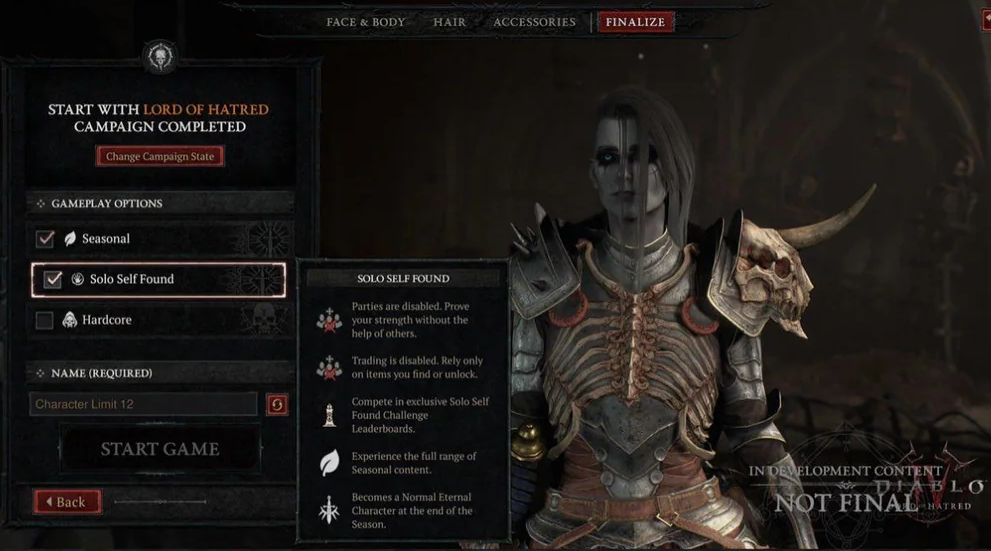
What is Solo Self-Found (SSF) Mode in Diablo 4?
Solo Self-Found (SSF) is a restricted gameplay mode where players create a character that is permanently locked into solo progression.
In short:
SSF mode means you play Diablo 4 completely solo with no trading, no grouping, and fully self-earned gear progression.
According to Blizzard’s seasonal system design philosophy outlined in official Diablo IV updates Blizzard Entertainment, SSF-style modes are intended to create “fair competitive environments based purely on individual progression.”
Core Rules: How D4 SSF Works
The D4 SSF rules are strict and designed to eliminate all external advantages:
- Permanent Solo Lock: Once enabled, SSF cannot be disabled for that character
- No Trading System: Gold and items cannot be exchanged with other players
- No Group Play Benefits: Progression is fully solo-based
- Seasonal Separation: SSF characters exist within seasonal ecosystems only
- Independent Progression: No shared economy or market influence
This creates a pure ARPG experience focused on personal skill, farming efficiency, and build optimization.
What is Disabled in Diablo 4 SSF?
In SSF mode, several core multiplayer systems are completely disabled:
- Trading with other players
- Party-based dungeon scaling advantages
- Group loot farming strategies
- Auction or player-driven economy interactions
This makes SSF fundamentally different from standard Seasonal or Eternal Realm play.
Can You Play Dark Citadel in SSF?
No — and this is one of the most important restrictions.
The Dark Citadel, introduced in Diablo 4’s endgame co-op structure (linked to the Vessel of Hatred expansion systems), is designed as a mandatory multiplayer activity.
Because SSF is strictly solo-only:
- You cannot queue or enter Dark Citadel in SSF mode
- The activity requires coordinated group mechanics
- SSF characters are locked from party-based endgame zones
This is consistent with Blizzard’s design philosophy for group-exclusive endgame content Blizzard Entertainment.
How Do SSF Stashes and Progression Work?
SSF progression uses a self-contained storage system:
- All stash tabs are account-bound within SSF mode only
- Gold, materials, and crafting resources are shared only between your SSF characters
- No transfer between SSF and non-SSF realms
- Seasonal SSF stash resets after season end (standard seasonal rule)
This ensures a fully isolated economy where every upgrade must be earned through gameplay alone.
Not your style? Try Seasonal or Hardcore mode with SSEgold.
Table of contents
Recommended Article